Descriptions
Three lengths, ready to paste. No attribution required.
One line
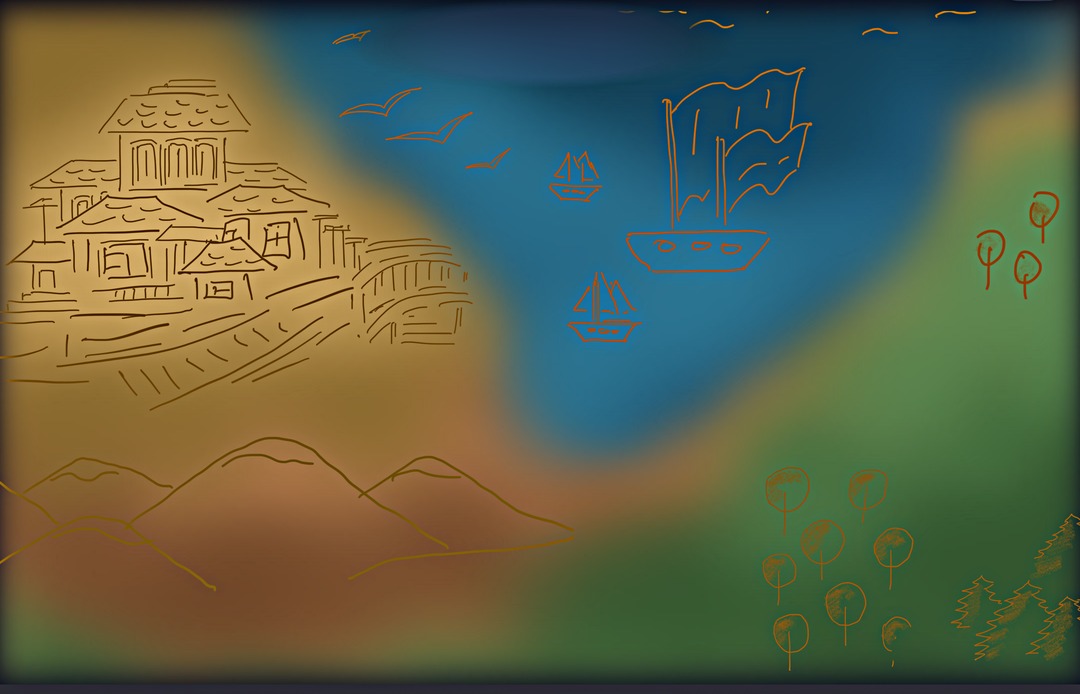
A private dream journal for iPhone and iPad, with a hand-drawn map of the places you keep returning to at night.
Short paragraph — 48 words
Onar is a dream journal for iPhone and iPad. Write, speak or sketch a dream before it fades, tag it with symbols from a dictionary of over 300 entries, and mark the places you visit at night on a map you draw yourself. There is no server and no account — entries stay on your device and sync through your own iCloud.
Full description — 186 words
Onar is a private dream journal for iPhone and iPad, built around one problem: ten minutes after waking, most of a dream is gone.
So it offers three ways in, and you take whichever is fastest. Write it. Say it out loud with your eyes still closed — speech becomes text on the device itself. Or sketch the shape you remember but cannot name, with a finger or an Apple Pencil.
What makes Onar unusual is what happens afterwards. A paper dream journal doesn't search. Twelve years of dreams, and not one of them findable. Onar connects what repeats: tag entries with symbols from a dictionary of over 300 entries drawn from the Jungian tradition, phrased as questions rather than verdicts. Mark the places you keep returning to — a town, a sea, a forest — and paint your own Dream World, a map that grows as you dream. The map is free, with no subscription at all.
Privacy is not a feature here but an architecture. Onar has no server and no account. Nothing is uploaded, nothing is analysed, and no AI reads anything. The App Store privacy label reads: Data Not Collected.
About the developer
Onar is made by Metin Demirel, an independent developer based in Türkiye, working alone and without outside funding. The app ships in nine languages, uses Apple's own frameworks throughout, and contains no third-party code that could see user data.
Why not just use a notebook?
Because paper doesn't search. A notebook holds everything you dreamed and gives back none of it: no way to find every dream with water in it, no way to notice that the same town has appeared four times in a year. Onar keeps the speed of writing by hand — and adds what comes after.