What it usually means
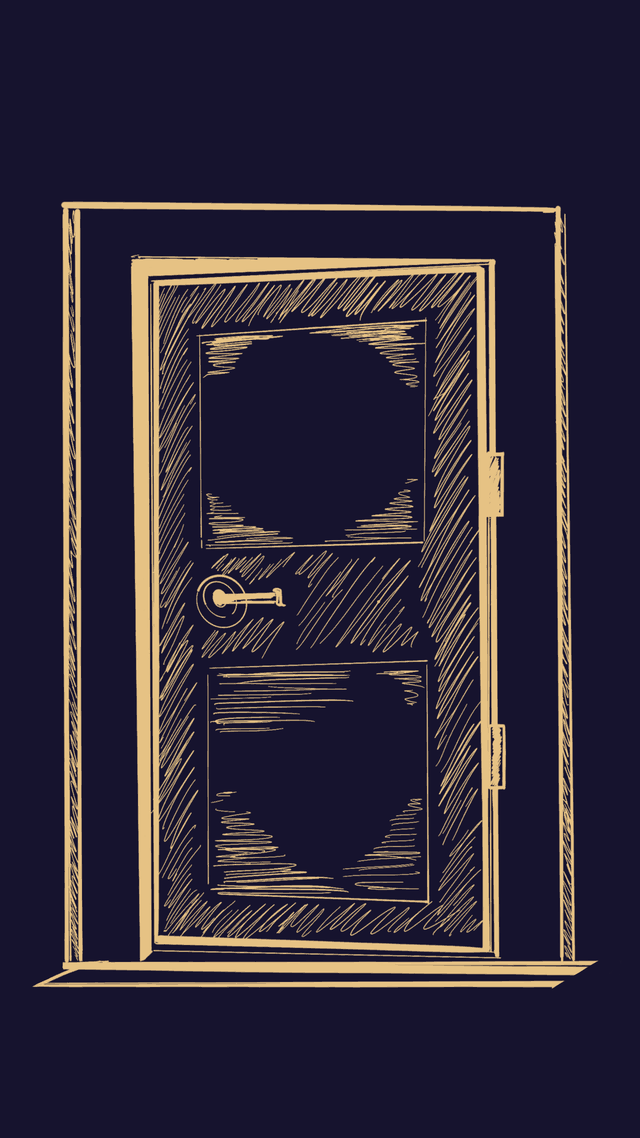
A door is a threshold, and thresholds are where dreams like to put you. On one side is the life you are living; on the other, a possibility, a change, a room you have not been in. The door itself does almost nothing except hold you at the point of deciding — the point waking life tends to rush past.
Because of that, door dreams are usually about transition rather than destination. They rarely show you what is behind the door, and the absence is not a failure of the dream. The subject is the passage: whether it is open, whether it is yours to open, and whether you want to.
A door also implies a boundary and someone who controls it. Doors are how a house decides who comes in. When a dream puts weight on the lock, the handle, or the person standing in the way, the subject has usually shifted from possibility to permission.
What changes the meaning
A closed door. The most common form, and less negative than it feels. Closed is not locked. A closed door marks something available and not yet approached — a conversation, an application, a question you have not asked.
A locked door. Obstacle proper, and one with a history: someone locked it. Worth asking whether the dream suggested who. A door locked from your side means something different from one locked against you.
An open door you do not go through. Hesitation in its clearest form. The way is open, nothing is stopping you, and the dream ends with you standing there. This one tends to arrive during periods when an opportunity is real and the decision is not being made.
Going through without looking back. Commitment. These dreams are usually short and feel resolved on waking, and they often follow a decision already taken in waking life rather than preceding one.
A door that will not close. Boundaries again, from the other direction. Something you want shut is not staying shut — a habit, a person, a subject that keeps coming back into your life.
Many doors, or a corridor of them. Choice without information. Usually a period of too many options and no basis for choosing between them, which is a different problem from having no options at all.
Someone knocking. Something asking to be let in. Note whether you answered. Dreams of knocking that go unanswered often come up in periods of avoidance.
A door opening onto something impossible. A cupboard giving onto a field, a bathroom onto the sea. Almost always a good sign in feeling — the mind reporting that the next step leads somewhere larger than the current arrangement suggests.
A door behind you closing. Endings that are already done. These often accompany the weeks after a resignation, a move, or a breakup, when the decision is made and the mind is still confirming it.
When it keeps coming back
A recurring door dream generally reports a decision that is still waiting. It is one of the more literal repeating dreams: as long as the choice stands unmade, the image has a reason to return, and it tends to stop once the thing is settled one way or the other.
Watch which part repeats. The same door in different places usually points at one specific decision. Different doors in the same situation — always closed, always hesitating — points at how you handle choices generally. And if the dream begins to change, with a door that was locked now opening, something in the waking situation has usually moved before you noticed it.
In Jungian terms
Jung's interest was less in the door than in what it marks: the line between what a person has admitted into consciousness and what they have not. In that reading a closed door is not an obstacle put there by the world. It is a boundary maintained by the dreamer, usually for reasons that once made sense.
What sits behind it is rarely as dramatic as the guarding suggests. Often it is something ordinary that was inconvenient to acknowledge — an ambition, a grievance, an attachment, a part of yourself that did not fit the person you were being. The energy spent keeping it shut is what makes it loom.
The image asks a question that is easy to answer and uncomfortable to sit with. What is on the other side, and who decided it should stay closed?